Exhibition Stand Lighting: How Good Lighting Shapes Customer Perception
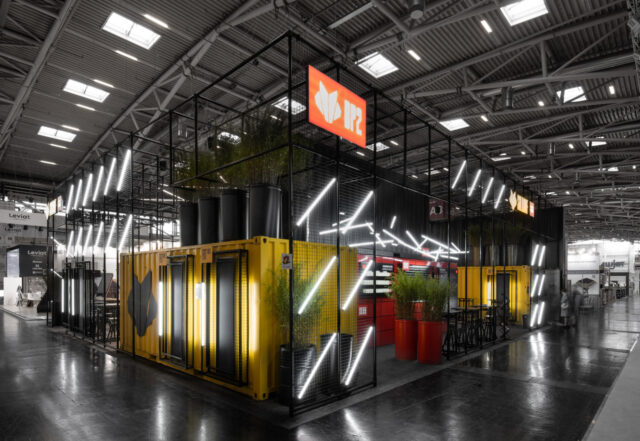
Lighting is fundamental to an effective exhibition presence. It shapes the space and influences how potential customers perceive your brand. A well-designed lighting scheme can help your stand stand out from competitors and contribute to the event’s success. Explore professional lighting solutions that can help your company shine at its next trade fair.
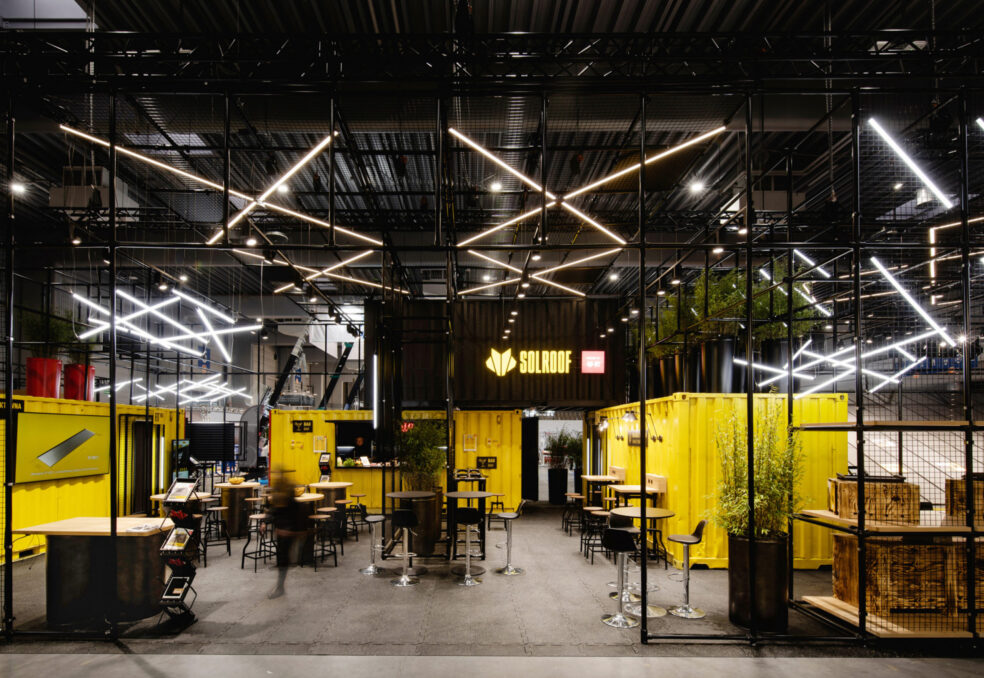
Exhibition stand lighting: a key part of the design
Lighting is one of the foundations of effective exhibition stand design. It should be considered from the earliest stages, when the design documentation is prepared. This documentation specifies structural components and the stand’s equipment, including furniture, display counters and a carefully planned lighting layout.
Why does lighting matter at trade fairs?
Stand lighting is also an important part of your exhibition marketing strategy. Its main functions include:
- Attracting attention — strategically planned lighting helps your stand stand out in a busy exhibition hall.
- Creating the right atmosphere — appropriate light colour and intensity make a space more welcoming and encourage interaction.
- Showcasing products — well-positioned accent lighting directs attention to key exhibits and products.
- Reinforcing brand identity — lighting that works with your visual identity communicates the brand’s character.
- Supporting visitor comfort — a considered layout makes the stand functional and comfortable for customers and staff.
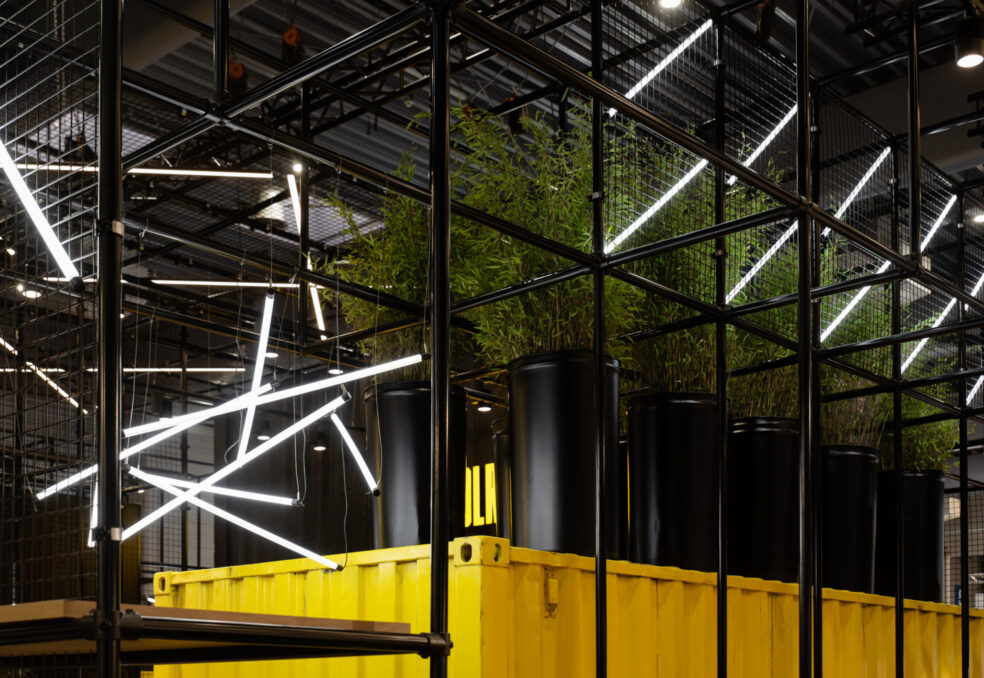
A professionally lit stand helps visitors remember your company, creates positive associations and supports valuable business connections.
How does lighting influence the way people perceive your stand?
Lighting design is closely connected to colour psychology: how colours influence emotions, decisions and perceptions. Colours can create associations and affect mood, making the choice of light an important part of brand presentation and the visitor experience.
Light colour shapes the atmosphere and perception of the exhibition space, which is why different industries often take different approaches. Interior furnishings brands commonly favour warm light to create an elegant, welcoming feel. For cosmetics and fashion projects, we choose neutral lighting with appropriate colour-rendering performance to present products faithfully on our exhibition stands.
Some technology brands use cooler white light, but product appearance and visitor comfort should guide the choice rather than a fixed rule for the sector. Luxury brands call for particularly careful lighting design. Controlled contrast can create a dynamic space and give featured products an exclusive character.
Types of exhibition stand lighting
The right combination depends on the stand’s size, layout and objectives. Different light sources can highlight key features and establish the desired atmosphere:
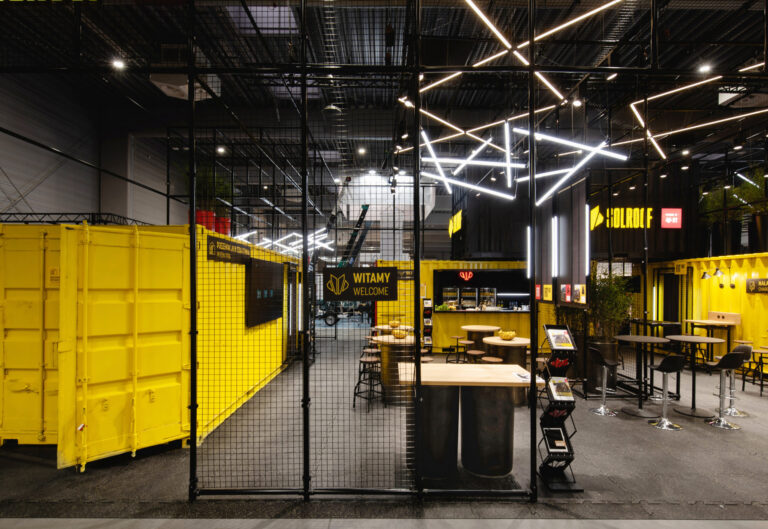
- General lighting provides even illumination across the exhibition area and supports visitor comfort.
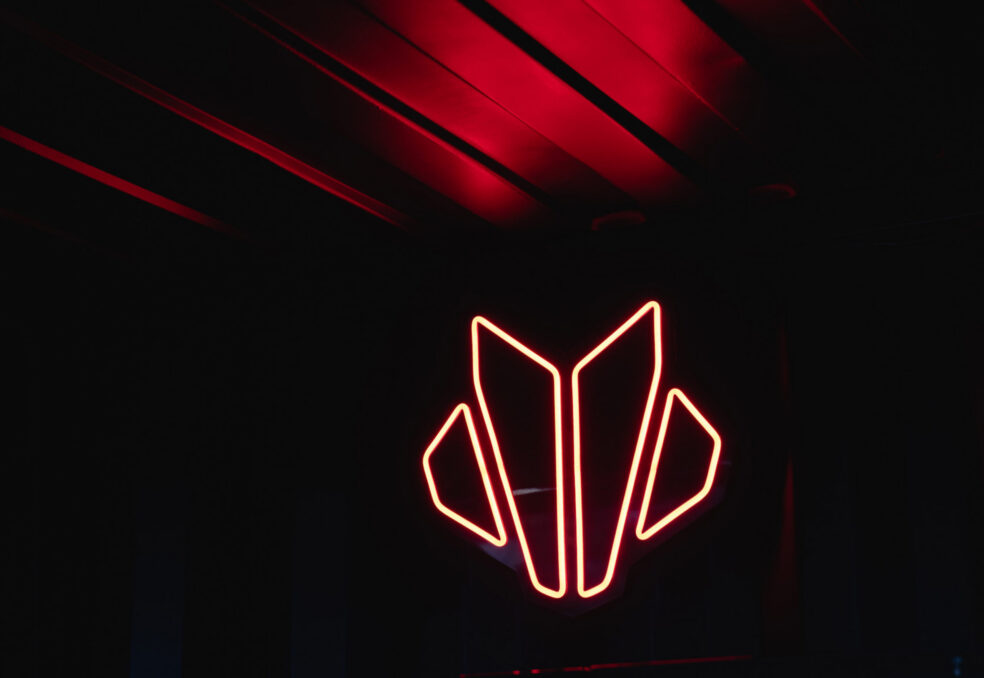
- Accent lighting focuses attention on selected products or decorative features. It separates objects from their surroundings and can create an exclusive or intriguing atmosphere.
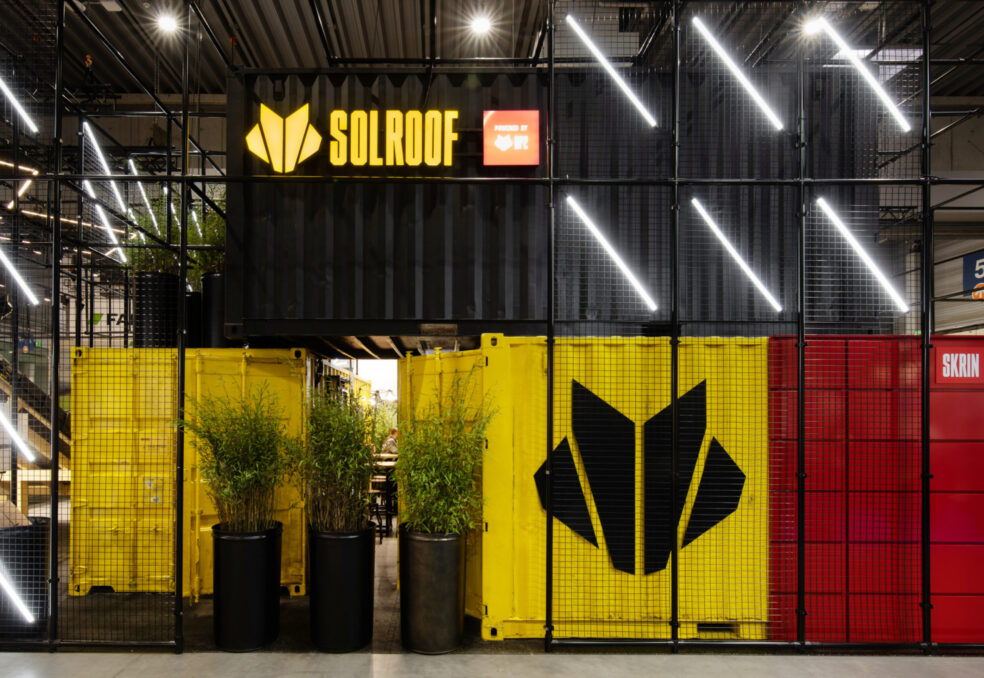
- LED panels are versatile, energy-efficient modules used to illuminate logos, displays, reception counters and structural edges, or create lightboxes. Select the colour temperature to suit the scheme.
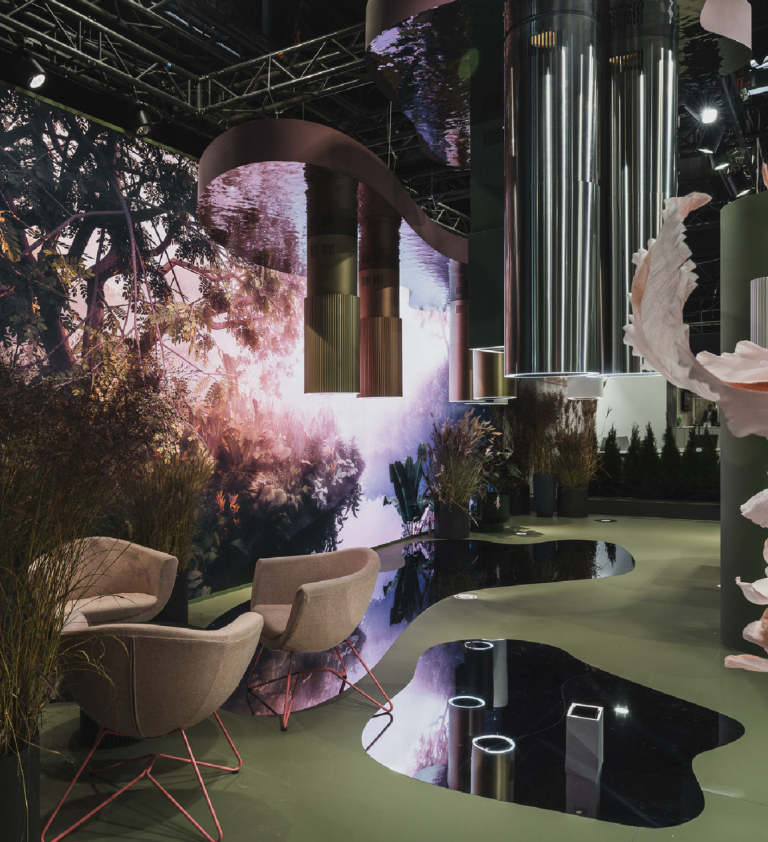
- Exhibition LED luminaires can support creative solutions such as illuminated floors and light walls.
- Spotlights provide directional light for highlighting details and attracting attention.
Combining lighting techniques thoughtfully makes exhibition stands more visually appealing and functional, helping visitors remember what they have seen.
How to choose the right lighting
Choose lighting around the stand’s purpose and the character of your industry. Positioning, colour, intensity and operation all matter.
Consider:
- The stand’s objective: is the focus on sales, brand image or customer interaction?
- The products: delicate materials may call for subtle lighting, while technical products can benefit from cooler, more intense accents.
- The colours and design: lighting should support the overall visual concept and reinforce the brand message.
- The location: island stands in areas with limited daylight or weak general lighting need a scheme that provides visibility and sets the display apart from its surroundings.
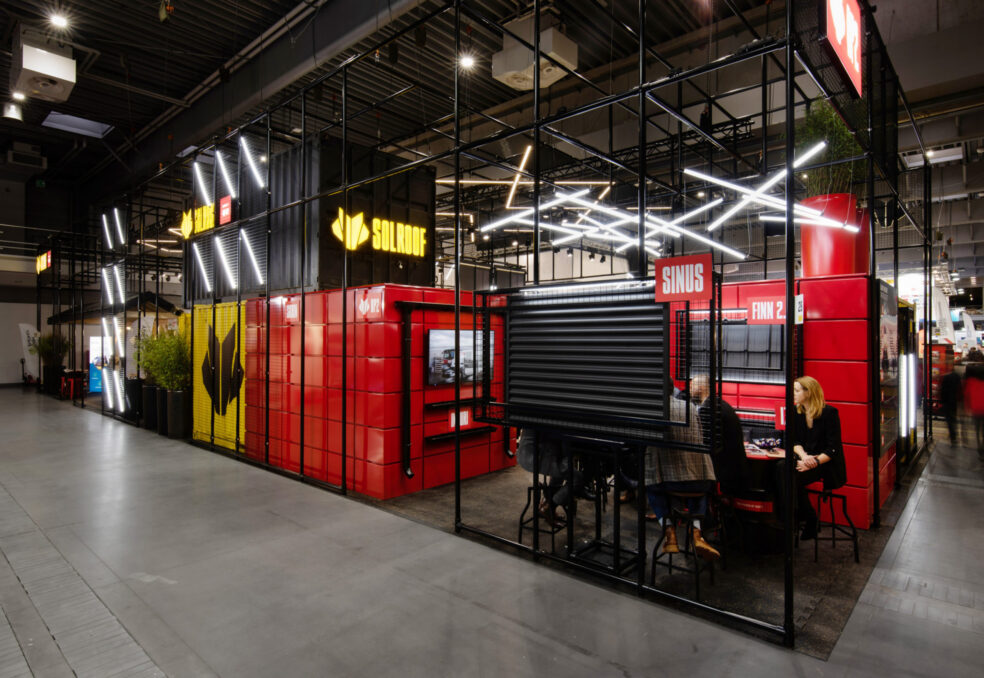
Innovation in exhibition stand lighting
Lighting technology continues to offer new ways to attract attention. Contemporary solutions can showcase products and adjust dynamically to changing conditions and visitor needs. Interactive lighting can also strengthen the overall brand experience.
Smart lighting systems
Lighting systems can be controlled through mobile apps or motion sensors. Depending on the setup, they can adjust intensity and colour in response to the time of day, visitor numbers or the products on display. Interactive installations react to people’s presence and movement, directing attention towards key exhibits and supporting marketing communication.
Exhibition lighting design trends
When choosing luminaires and planning a scheme, keep colour temperatures consistent and avoid unplanned mixing within a display. Any variation should be a deliberate part of the design.
Contemporary lighting combines aesthetics and functionality. Minimalist LED fixtures, dynamic colour control and carefully positioned accent lighting can communicate a stand’s individual character and attract visitors. Energy-efficient solutions are also increasingly important, helping reduce electricity consumption and supporting more responsible exhibition design.
Technical checks before installation
Review the venue’s ambient light alongside your own scheme. Confirm the electrical load, connection points, control system and who will operate it. Check glare from the aisle and at seated eye level, and avoid reflections that make screens or polished products difficult to see.
Test representative materials and products under the proposed lighting. Colour rendering, beam angle, brightness and colour temperature all affect the result; a render alone cannot confirm the final appearance. Keep lighting consistent across a product range unless the contrast is intentional, and prepare a simple operating plan for the stand team.